Packing Light for a Midday Return
Pack for the middle of the day, not for the photograph at the start. The return is when the path is less charming, the shoulders are less patient, and every extra object announces itself.
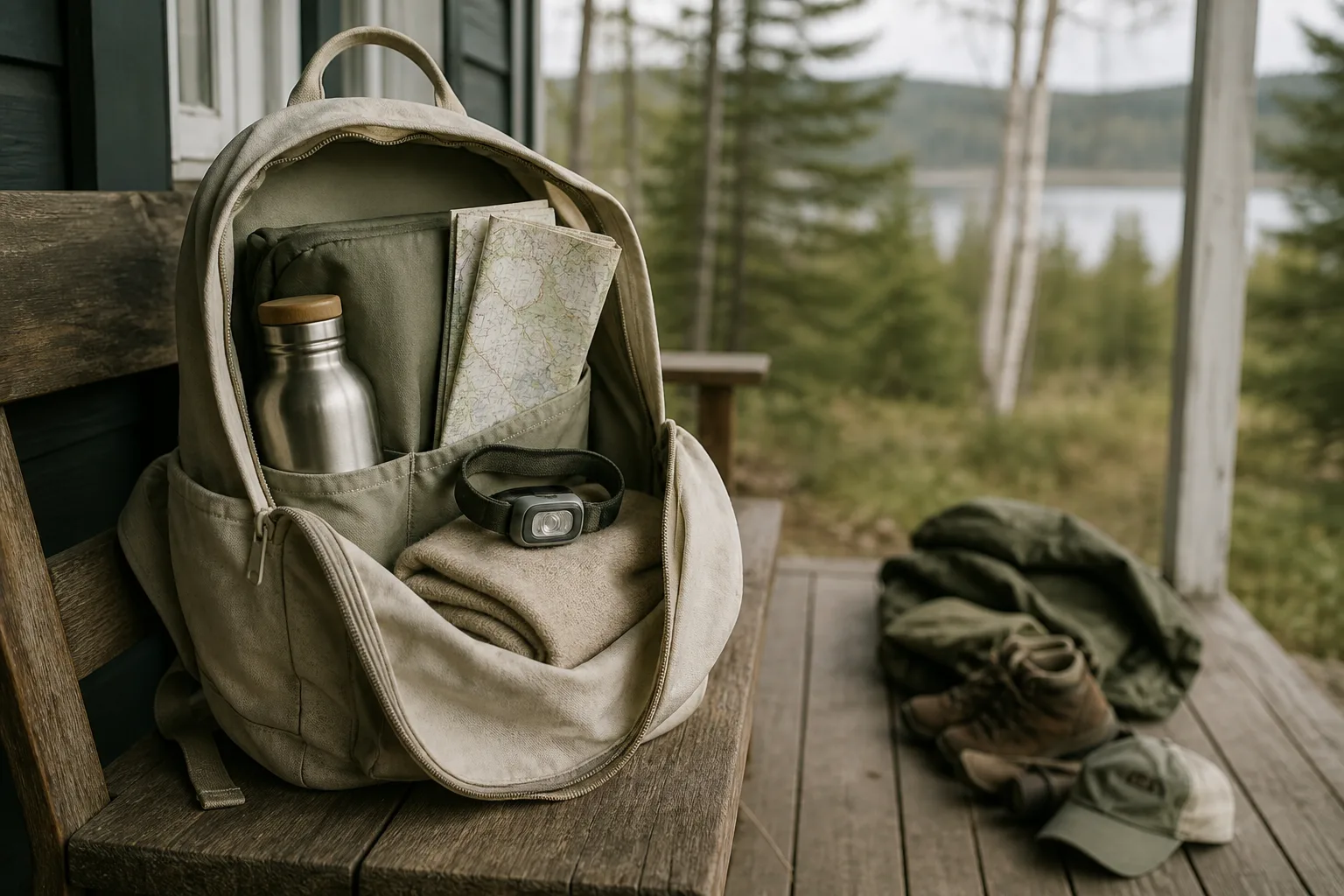
I have watched first-time walkers load a daypack as if the outing were a weekend camp and a souvenir run at once. The bag looks impressive on the porch. On the descent it becomes an argument. Water runs out earlier than the map suggested. The spare jacket never left its stuff sack. The objects that mattered were few, and the rest were theatre.
This note is about packing for a midday return on a day path. It is not a shopping list and it does not replace advice about fitness or how much load your body should carry. Those questions belong with specialists. Here we stay with what belongs in the bag so the sequence of the walk stays workable.
Pack for the middle, not the trailhead pose
At the start, weight feels abstract. In the middle, after heat, mud, or a crowded pinch, weight becomes specific. Pack as if you will still need water, a layer, a small light, and a map you can unfold with cold or damp hands. Leave decorative extras where they cannot slow the return: on the porch, in the room, or in the car you are walking back to.
What usually earns a place in the bag
- Water you will actually drink before the turnaround, not a token bottle.
- One light layer for wind or a temperature drop on the way down.
- A compact light, even on a day walk, for delays and mark reading in shade.
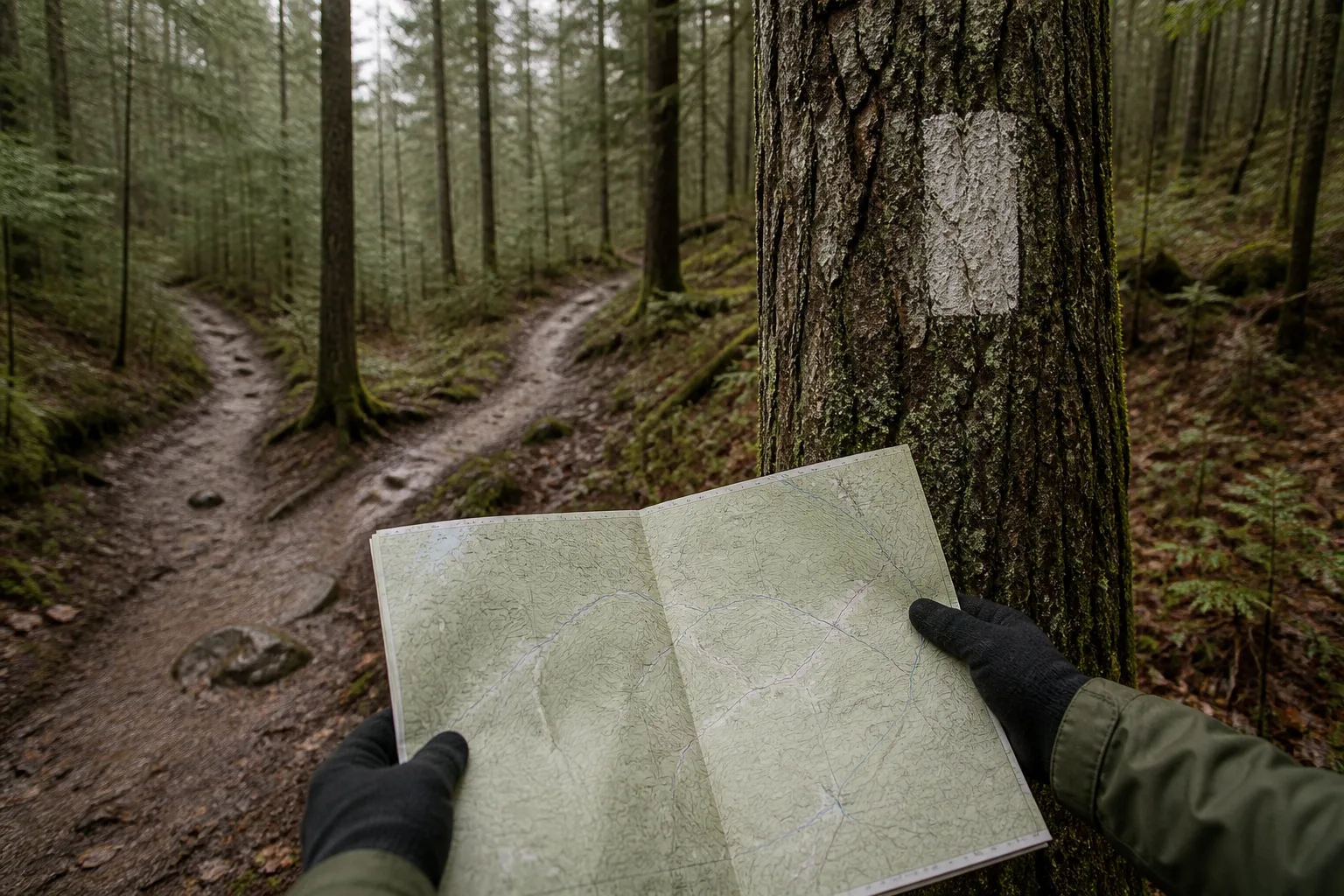
- The paper map or leaflet you will unfold, not only a phone drawing.
- A small amount of food that does not require a full picnic setup.
- Any personal item you truly need and will not invent mid-route.
If an object only exists to look prepared in a photograph, it does not belong in a bag meant for a midday return.
What stays on the porch
- Extra shoes “just in case” when one reliable pair already fits the day.
- Heavy camera kits that turn every pause into a studio session on the mark.
- Souvenir space you hope to fill before you know the return pace.
- Duplicate gadgets that drain attention more than they add safety.
- Unread guidebooks you will not open once the leaving hour is set.
How extra weight shows up later
On the outward leg, people forgive a heavy bag because the day still feels long. On the return, the same bag slows decisions. Groups skip planned pauses. Someone resists reversing at the written turnaround because “we already carried all this.” That is how packing becomes a daylight problem. A lighter bag makes the honest turnaround easier to keep.
Weather multiplies the same effect. After rain the surface is slower. In heat the climb costs more. Wind on a shore line makes a bulky pack catch every gust. Packing light is not a style preference. It is part of keeping the sequence you wrote at home.
Shared group gear needs the same honesty. One map for three people is usually enough. Three duplicate kits are not. Decide at the porch who carries water for whom, who holds the leaflet, and who keeps the small light accessible. Ambiguous sharing creates quiet overpacking, because everyone brings a private spare “in case.”
A quick porch test before you leave
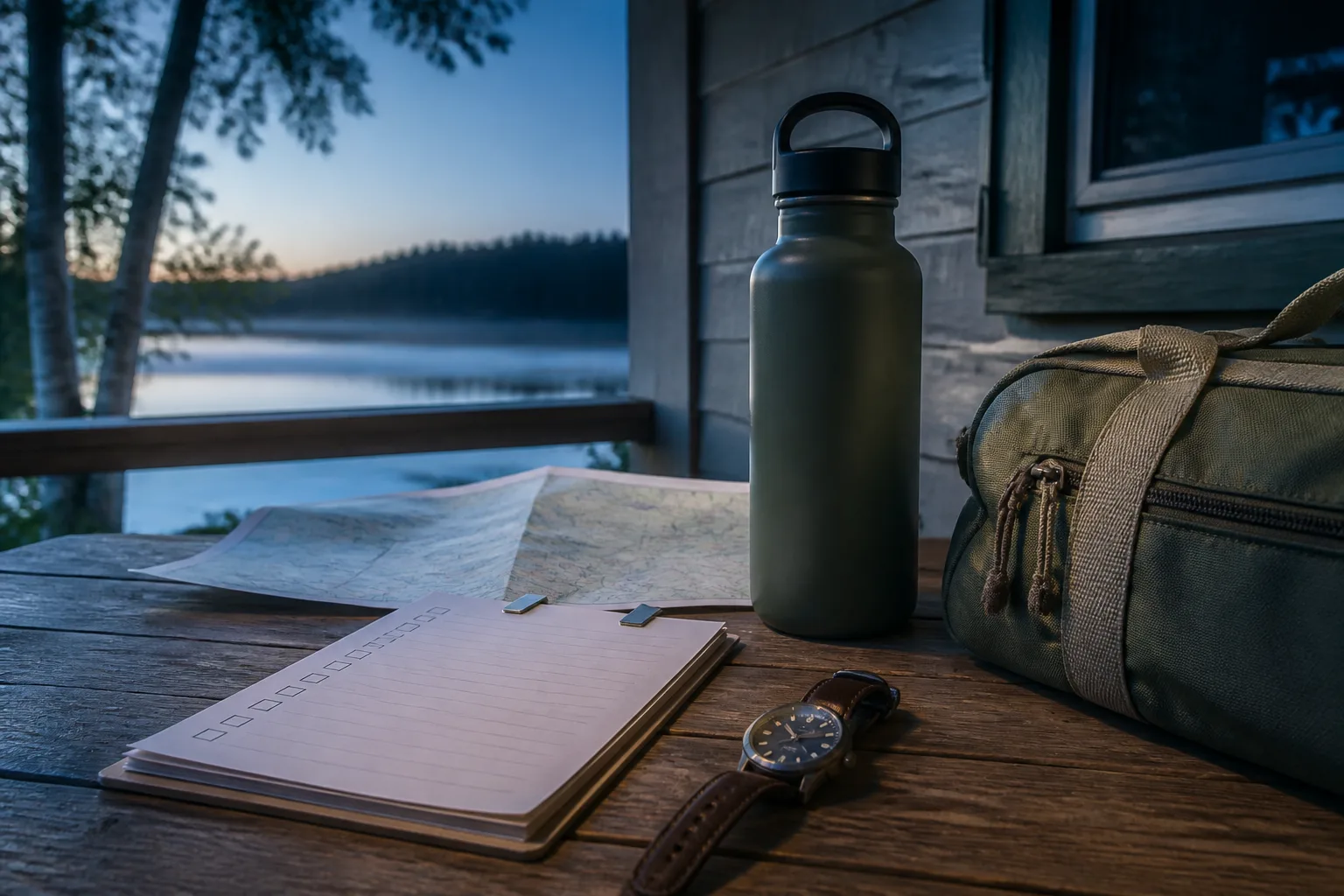
Lay out the bag contents on a table. Remove anything that does not serve water, weather, light, wayfinding, or a true personal need. Put the removed pile out of reach. Then walk a short loop around the block with the closed pack. If the bag already feels like a statement, it will feel like a penalty after the high point.
Do the test after you set the leaving hour and turnaround, not before. Packing without timing invites people to carry “options” instead of decisions. Options are heavy. Decisions travel lighter because they tell you what can stay behind.
At dacitepeak we fold this porch test into consultations on the day-walk portion of a trip. We do not sell gear and we do not run a packing platform. We help you keep the bag honest so the leaving hour and the turnaround still mean what you wrote down. Carry what the middle of the day needs. Leave the rest where it cannot argue on the way home.