What to Check at Home Before Your First Day Hike
Regular walkers finish the hard decisions before they leave the house. A first day hike goes wrong less often because of distance than because the leaving hour, weather call, and turnaround were still open questions at the trailhead kiosk.
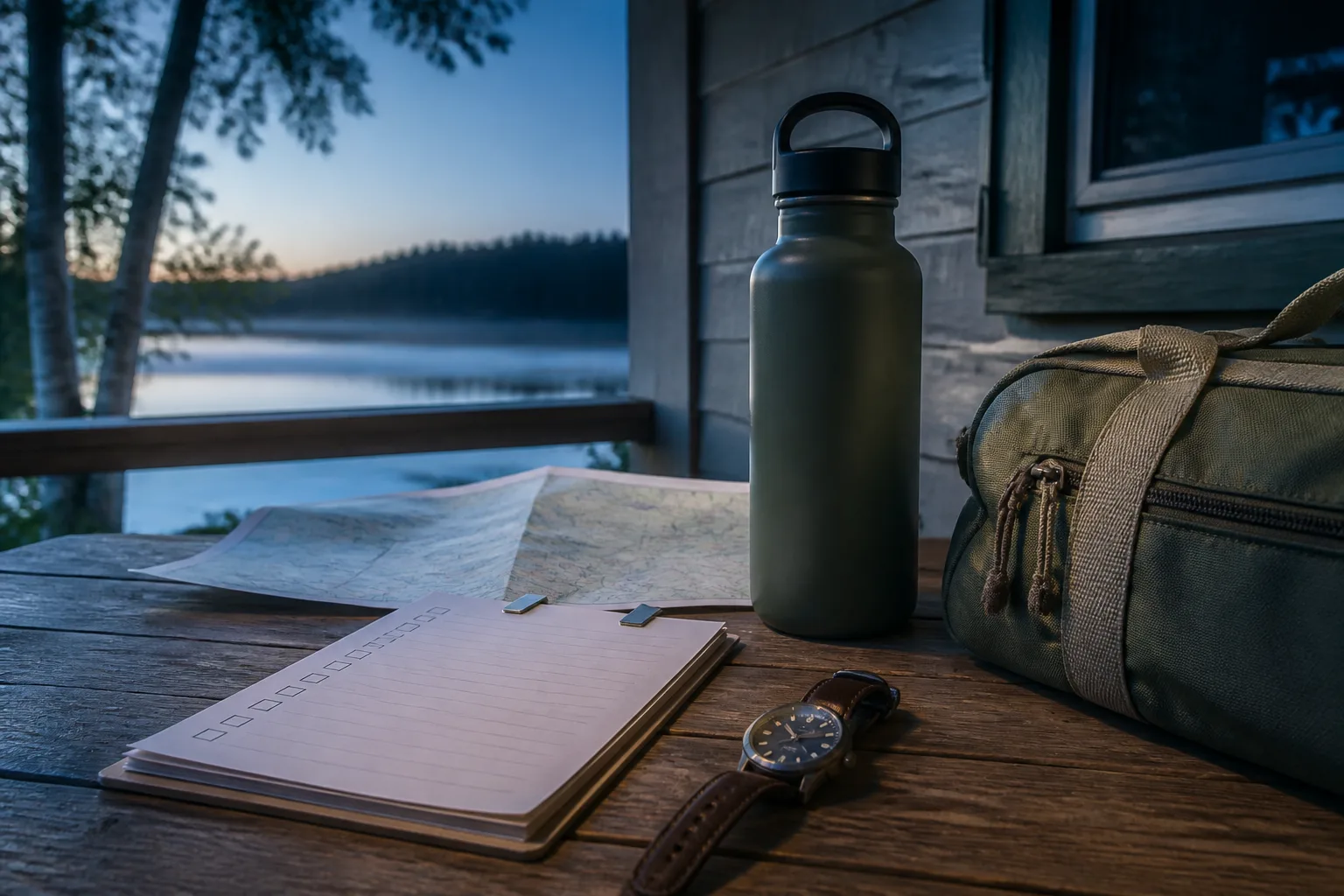
I used to write visitor leaflets that tried to say everything on one crowded board. People skimmed the bright icons and skipped the quiet lines about when to leave. On a day path, those quiet lines are the walk. If you are going for the first time, treat the morning at home as part of the route—not as packing time before the “real” outing begins.
This note is a working sequence for that morning. It is not a fitness plan and it does not promise an easy path. It is the order I ask people to finish on paper so the trailhead is for starting, not for inventing a plan under pressure.
Why the kitchen table beats the kiosk
At a trailhead you are already committed. The car is parked, the group is restless, and the photograph on someone’s phone looks cleaner than the weather outside. That is a poor place to decide whether the walk still fits the light you have. At home you can still shorten the plan, move the leaving hour, or choose a town loop instead of a wooded spur without arguing in a parking lot.
Write the plan in language a tired person can still read. Short sentences. Concrete cues. If a line only makes sense to the person who wrote it, rewrite it before you leave.
The checks to finish before you lock the door
- Leaving hour. Pick a clock time, not a mood. Work backward from the light you expect on the return, and include time for pauses.
- Weather window. Read the forecast for wind, rain, and heat on the path itself, not only for the town where you slept.
- Turnaround cue. Name the moment you reverse even if the viewpoint is still ahead—remaining light, a timed halfway mark, or a clear fork you already chose as the end of the outward leg.
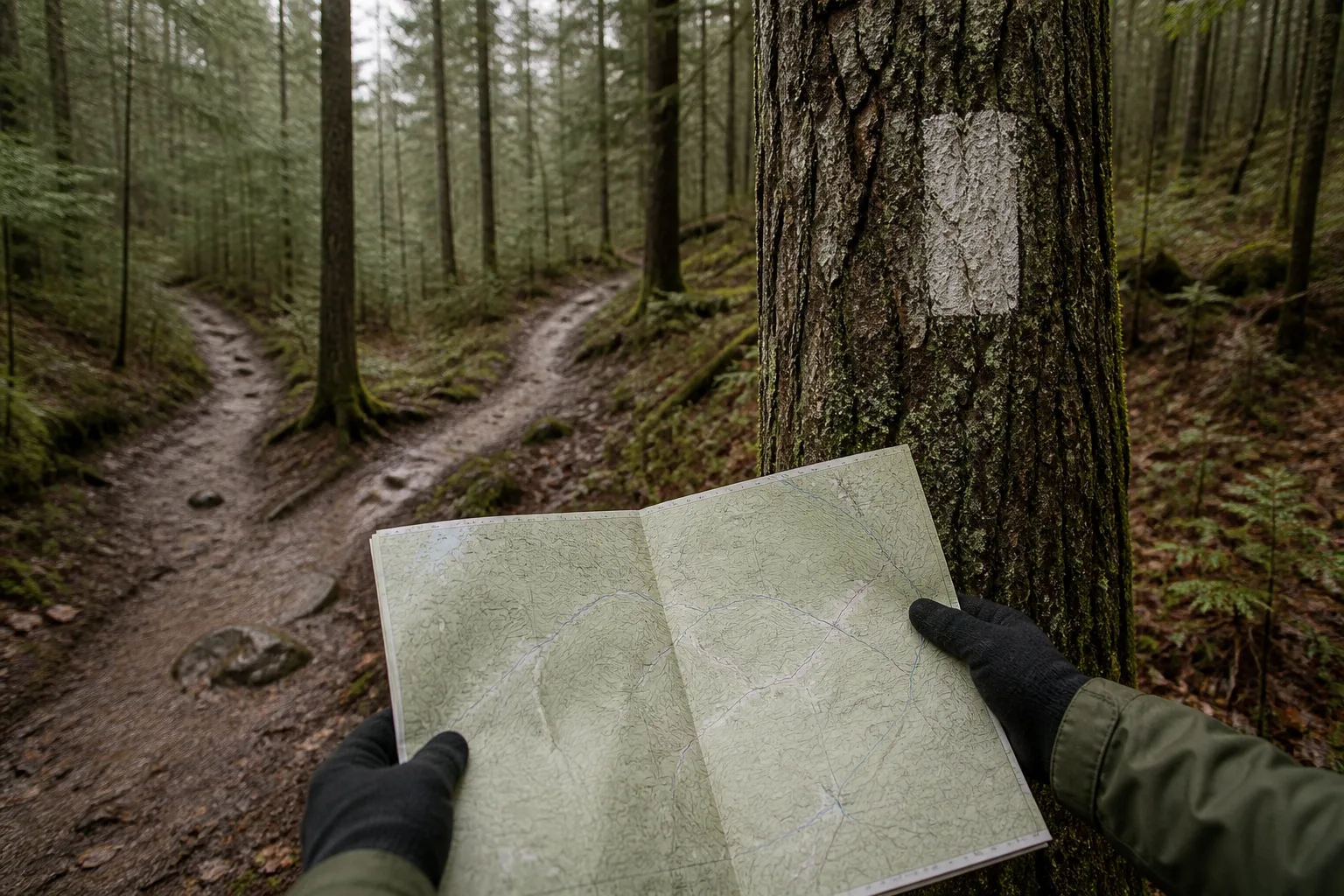
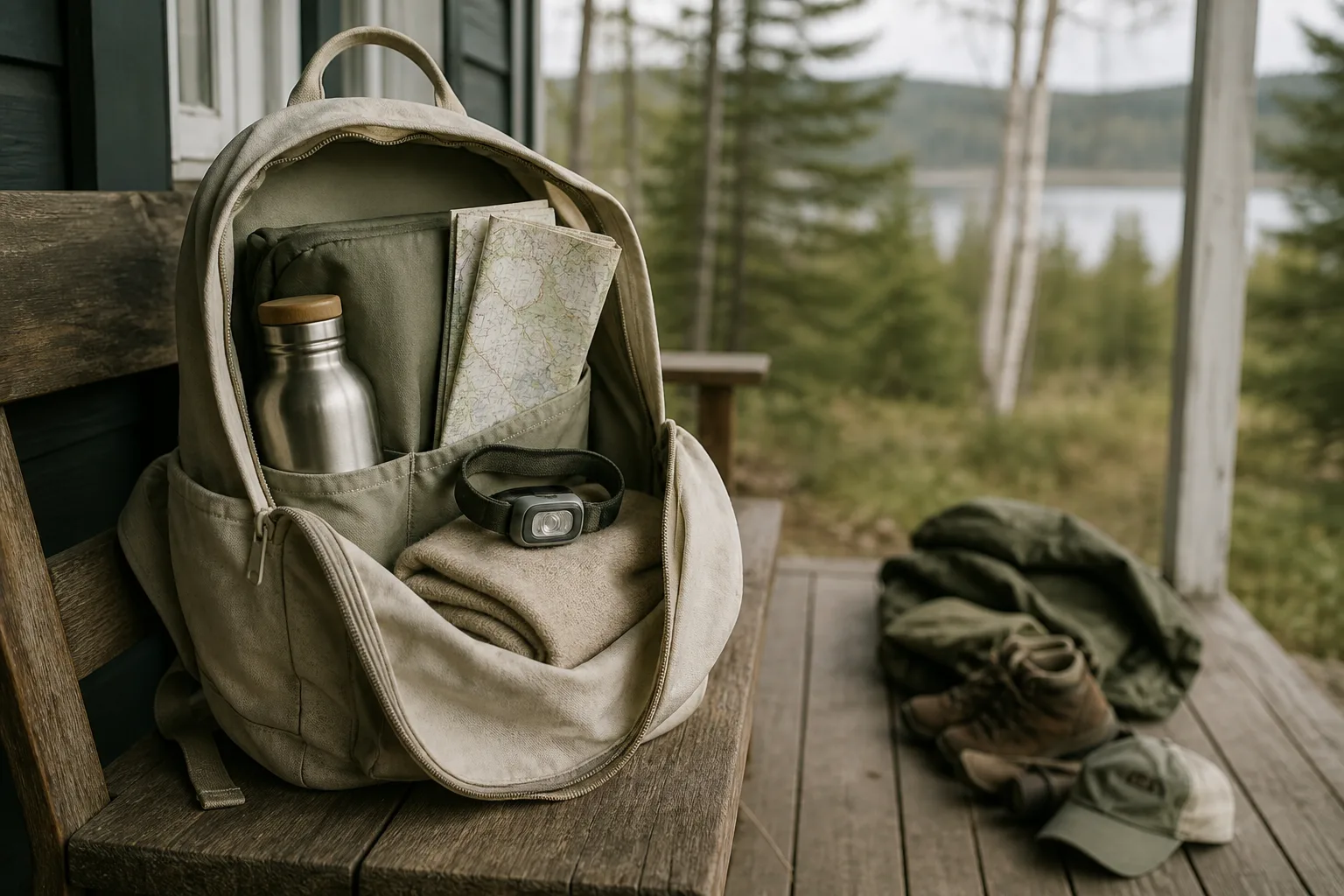
- Pack for the middle of the day. Water, a layer, a small light, and the map you will actually unfold. Leave souvenirs and spare gadgets on the porch.
- Backup shorter loop. Write one alternate that reverses on the same ground if marks disagree or the surface turns.
- Who holds the plan. Make sure every walker can say the leaving hour and the turnaround out loud before you start.
The trailhead is for starting. The kitchen table is for deciding. Mix those jobs and the day begins already late.
What “done” looks like on paper
A finished checklist is not a pile of gear on the floor. It is a short page you can hand to someone else. I ask groups to include the leaving hour, the turnaround cue in one sentence, the backup loop name, and a note about how they will handle a disagreement between map and mark. If that page feels empty, you are not ready to drive to the start.
- Say the turnaround in plain speech: “We reverse at two if we have not reached the ridge post.”
- Keep the backup loop on the same sheet, not in a separate message thread.
- Confirm shoes and water again after the weather printout, not before.
- Leave pride off the list. Shortening the walk is a decision, not a failure.
Common mistakes on a first outing
People often pack as if the walk were a photoshoot and plan as if daylight were flexible. They leave “when everyone is ready,” which usually means an hour later than the light allows. They trust a phone drawing more than the ground at the first unmarked fork. They skip naming a turnaround because the route “looks short on the map.”
Another quiet mistake is treating the checklist as optional once the group feels excited. Excitement is not a substitute for a leaving hour. If the plan only lives in one person’s head, it will dissolve at the first delay.
How this fits a consultation
At dacitepeak we use this same home sequence when someone asks for help with the walking hours of a trip. We do not invent a booking or run a trail. We help you write the order so you can leave with a page that still works when the day is less charming than the photograph. If your outline only names a scenic image and no timing, start with these checks before you ask for anything more detailed.
Finish the paper at home. Lock the door with a plan you can reverse. Then the path can be what it is—a working part of the trip, not a scramble invented at the kiosk.